The B2B buyer journey is often complex and non-linear, involving multiple stakeholders. The approach to B2B lead gen should focus on adopting channels that effectively capture the impact of individual channels and, at the same time, provide a holistic view of the buyer journey, enabling informed decisions to move buyers through the sales funnel. The biggest question is whether we should go with an omnichannel attribution strategy or choose a multichannel attribution strategy to yield results in B2B marketing. Choosing the right strategy goes a long way in building a strong B2B pipeline and achieving sustainable growth. Let’s discuss omnichannel and multichannel attribution, determine whether the two approaches are at loggerheads or complementary in B2B marketing, and decide which is best for closing B2B deals.
What is Omnichannel Attribution?
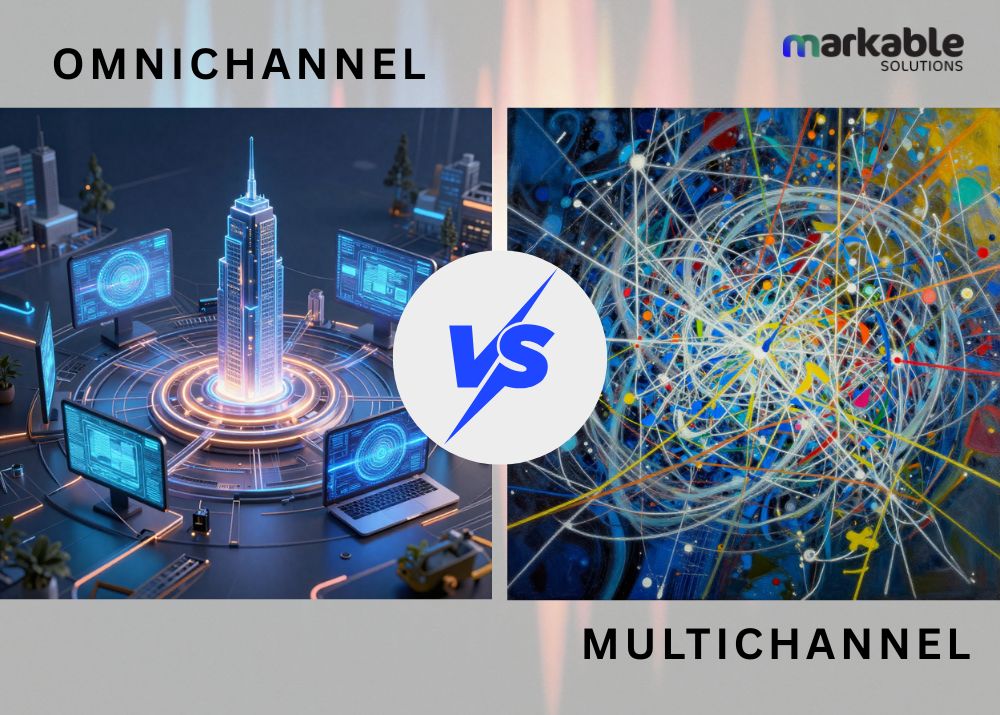
Omnichannel attribution adopts a single unified framework that encompasses the entire customer journey, uniting both offline and digital interactions with the business. An omnichannel attribution approach integrates customer data across all touchpoints and provides a single, unified view, offering a better understanding of the clients. It’s not about the final touch or treating it as the single most important channel for decision-making. Instead, it also considers all the channels that contributed to the final decision-making process. Every customer interaction is integrated into a single view, enabling full-funnel conversion. This approach focuses on the full customer journey from awareness to consideration to post-sales purchase. It binds the entire customer journey, analyzes what influences customers and how, and how they choose a specific action based on their stage in the sales funnel.
Let’s understand with an example. A prospective B2B buyer visits your website, product page, blog section, and contact form page, but doesn’t take any further action. The businesses account for this high-intent activity and send a dynamic email that reminds them of their USPs and underscores the company’s position to offer the specific product or service. Finally, the prospect books a meeting with the sales representative. The omnichannel attribution considers the cumulative effect of each touch point, the website, email, contact form, and call from the SDR, that have contributed to closing the B2B deal.
Why omnichannel attribution matters
Several factors influence the buyer journey and help it progress from awareness to consideration. Omnichannel offers a unified view of the buyer journey and connects every touchpoint across all the marketing channels customers have used to move through the B2B marketing funnel and make a final buying decision. The role of omnichannel attribution is to analyze how different channels are connected, how they affect the buyer journey, and how they influence the buying decision. It offers clear visibility into what drives conversions, helping allocate resources more effectively and optimize B2B lead-gen campaigns.
What is multichannel attribution?
A multichannel attribution approach considers all the marketing touchpoints a customer has encountered in the B2B marketing funnel and evaluates the individual impact on the buyer, but in isolation. It helps understand which channels support lead generation and help close more B2B deals, but does not account for how these channels may be interconnected in the final buyer journey. It reveals which channels performed but overlooks how all these channels unite to drive revenue. Let’s break it with an example. A prospective B2B buyer for a SaaS product sees a paid ad, visits the landing page, and finally books a demo with the sales team. The multichannel attribution assigns points to each channel- the paid ad, landing page visit, and engagement with the SDR. It measures the performance of each channel that drives leads to the buying stage of the B2B marketing funnel. But it does not account for how these channels work in sync throughout the entire buyer journey.
What is the importance of multichannel attribution?
Multichannel attribution offers clarity on which channels drive the desired results for a business. It allows the business to optimize marketing spend and prioritize channels that drive results. It can improve campaign performance by enhancing communication and targeting across the high-performing channels. Companies can focus on improving the channels that truly drive the transition from leads to customers. Companies can maximize B2B marketing ROI by identifying high-performing channels and focusing efforts on touchpoints that drive qualified leads and conversions.
What are the main differences between omnichannel attribution and multichannel attribution?
Omnichannel attribution refers to taking into account the entire buyer journey- what influences it, and how it affects the final conversion. It enables the business to understand the cumulative effect of these channels on driving revenue. This approach emphasizes the collective, relative effects of all the channels the buyer went through to reach the final buying decision. It helps optimize resource allocation and the campaign to increase revenue. It works with a CRM at the center of all the customer engagement efforts, connecting all that data. It leverages real-time insights to understand ideal customer profiles (ICPs) and their requirements. Companies can better align communication and drive better conversion rates. The omnichannel approach requires deep data analysis, CRM integration with AI-powered tools, and a high level of marketing maturity. When companies leverage them effectively, they increase conversion rates and win more B2B deals.
The multichannel attribution model in B2B marketing collects data across all the channels and measures the impact of each in isolation. It evaluates the performance of individual channels and offers not-so-deeply embedded funnel insights. Multichannel attribution requires basic data points on different platforms to evaluate their individual impact.
Which approach is best for achieving a high ROI in B2B?
The B2B sales cycle involves multiple stakeholders and is long. To navigate this journey, companies must adopt a B2B lead-gen strategy that aligns with their short- and long-term goals. That said, omnichannel attribution works alongside the typically long B2B sales cycle. It focuses on hyper-personalization and keeps the lead generation campaign on track with real-time insights and tech-enabled CRM, enabling the business to achieve a high ROI. A longer, more complex B2B buyer journey requires a complete view of the journey, which in turn requires an omnichannel attribution model that breaks it down at a granular level.
Multichannel attribution also has its own importance, as it helps understand which channels are contributing to the buyer’s movement through the sales funnel. It assigns credit to all the channels the buyers have engaged with and influences them at each stage of the buyer journey. It helps businesses understand which channels perform and contribute to the final decision-making process. They can optimize marketing spend, allocate resources across channels, and achieve high ROI.
Which strategy works?
Markable Solutions, a leading B2B lead gen agency in the U.S., offers end-to-end B2B marketing services, including personalized email marketing, waterfall content syndication, and SDR-initiated telemarketing. We don’t compel our clients to follow a single model or a one-size-fits-all approach. Some organizations prefer an omnichannel attribution strategy because they need to adopt a multi-touch B2B marketing approach and have a complex customer journey. They want to understand how individual touchpoints work, how to leverage each channel’s influence, and how to optimize marketing efforts. With data maturity, omnichannel attribution provides deeper market insights and supports a long-term B2B marketing strategy aimed at building a sustainable pipeline.
Some businesses deliberately adopt a multi-channel approach that aligns with their current goals. They may not have the data maturity or want to adopt a single B2B marketing strategy. As their strategies evolve and the buyer journey becomes more complex, they move to omnichannel attribution to gain a holistic understanding of the B2B marketing funnel. It gives them the flexibility to understand what works now and evolve their strategies as required.
FAQs
What is omnichannel attribution?
Omnichannel attribution considers the relative impact of all marketing channels and integrates them to create a unified B2B buyer view.
What is multichannel attribution?
Multichannel attribution helps understand the individual contribution of each marketing channel in conversion. This approach assigns credit to multiple channels and touchpoints.
What is the importance of attribution in B2B marketing?
Attribution is critical in B2B marketing because it reveals the impact of channels, both individually and relative to one another, in generating B2B leads in the B2B marketing funnel.