Highlights:
- Artificial Intelligence (AI) search tools like ChatGPT, Gemini, and Perplexity are replacing traditional search. B2B buyers are heavily relying on these AI tools for early-stage research. AEO and GEO have become non-negotiable for B2B SaaS marketing.
- Buying committees now comprise 6 to 10 stakeholders. A one-size-fits-all approach does not work. Companies must prioritize account-based marketing (ABM).
- AI automation is starting to orchestrate the buyer journey. But AI-enabled technology should support human expertise, not replace it.
- A PLG-and-sales-led motion hybrid model supports B2B SaaS lead generation.
- Rising customer acquisition costs (CAC) and longer sales cycles make customer expansion a priority to generate high-quality B2B SaaS leads.
B2B SaaS marketing has changed dramatically over recent years. AI search, larger buying committees, product-led growth (PLG), and rising customer acquisition costs (CAC) are reshaping how SaaS companies generate pipeline and revenue. Buyer behavior is changing rapidly as AI-powered search replaces traditional search engines during the early stages of software evaluation. It bypasses traditional SERP searches and now happens in the ever-evolving world of AEO and GEO. Marketing tools are evolving with artificial intelligence (AI), making their impact felt throughout the entire B2B SaaS buyer journey.
How B2B SaaS Marketing Is Changing: Trends You Can’t Ignore
- AI Search Revolution
As trends change, the B2B SaaS market needs to adapt to remain relevant and aligned with customers’ expectations. B2B SaaS marketers need to optimize for buying activity that happens in the dark funnel. Today, buyers actively use generative AI tools such as ChatGPT, Gemini, and Perplexity, and you need to be ready to position your business for dark-funnel B2B marketing. B2B buyers prefer a rep-free buying experience, and they are already researching the products and services you sell. Even before B2B SaaS buyers land on your website, they are already done with their research.
Answer Engine Optimization (AEO): B2B SaaS marketing needs a radical shift in content marketing. It involves structuring content so AI systems can easily understand, extract, and cite it in AI-generated responses.
Generative Engine Optimization (GEO): Make your content relevant, authoritative, and compelling, enabling large language models (LLMs) to pick it and feature it when users ask for product recommendations in your SaaS category.
SaaS companies can illuminate the dark funnel by optimizing their websites and content for AEO and GEO, increasing their visibility in AI-generated recommendations. B2B buyers are asking digital assistants for software recommendations. Instead of going the traditional search engine route, they bypass it and jump to AI tools to find products that best fit their industry or target market. The buyers are already forming their ‘day-one’ list before you even know they exist. These dynamic changes in the marketing landscape have prompted B2B businesses to adopt a more relevant, AEO- and GEO-optimized approach.
- Tap into the large buyer committees; one-size-fits-all doesn’t work; personalization does
The B2B buyer groups consist of multiple stakeholders. According to Gartner, a buying committee comprises an average of 6 to 10 decision-makers. Here, an important point is that each decision-maker gathers five pieces of content to facilitate their decision-making. The large buying group clearly indicates that they will need to be engaged with different content. SaaS companies need diverse content, ranging from blogs, case studies, whitepapers, webinars, and research papers to engage the target audience and ensure faster deal progression. B2B SaaS marketing should identify, target, and nurture prospective buyers through campaigns and content aligned with their stage in the buyer journey. A longer B2B sales cycle requires more time to reach the buying stage. Account-based marketing (ABM) can make your outreach highly successful and engage B2B buyers successfully. This lead-generation strategy can nurture multiple stakeholders within the same account through coordinated, personalized outreach. For instance, the finance approver and the procurement team will be treated differently, but the ultimate goal remains the same: B2B SaaS marketing and lead generation.
- AI Will Assist in Orchestrating the Buyer Journey
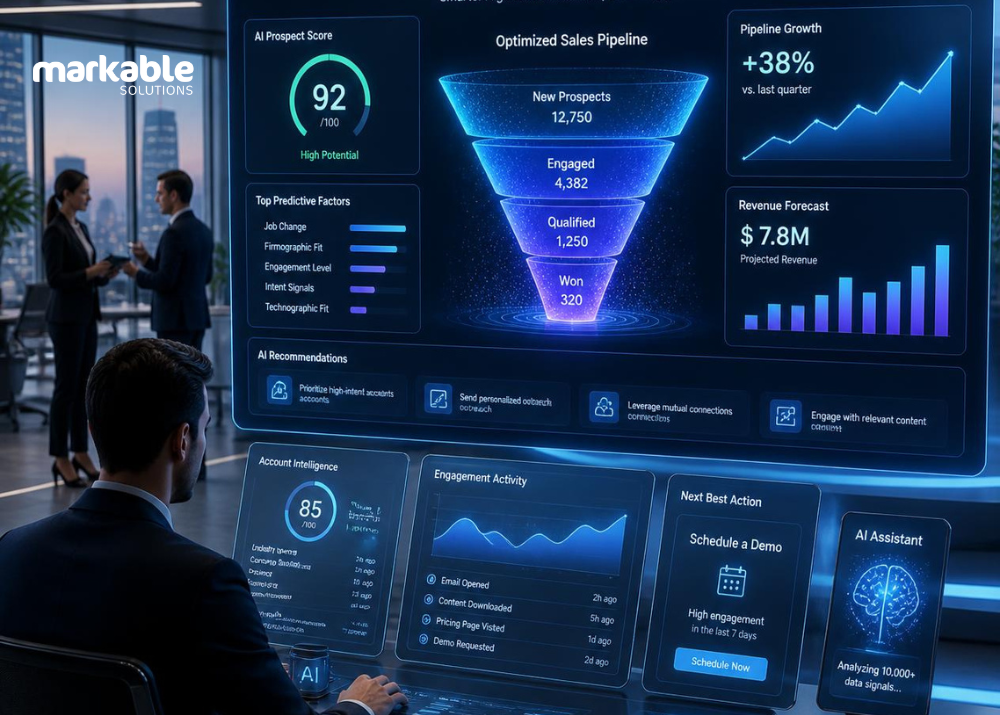
AI digital assistants and Agentic AI have ushered in a revolution. Today, AI integration use cases are not just about sending emails to prospective buyers and customers, but about handling the entire process from initial engagement to deal progression and closing. It’s not about carrying out lead generation strategies in isolation; it’s about advancing them with the help of artificial intelligence and orchestrating the entire journey around it. AI-enabled technology can not only identify ICPs for your SaaS marketing program but also provide personalized recommendations and generate qualified opportunities in real time. AI marketing automation tools can support sales enablement and accelerate sales velocity. Having said that, AI should be used as a sales enabler, not to replace the human experience and thought process. Though AI is taking center stage, SaaS companies must navigate the evolving B2B landscape with caution. If you’re a SaaS company, make your product and brand stand out with customer success stories, social proof, and executive thought leadership. Make your voice heard loud and clear in the competitive B2B marketplace. Strike a perfect balance with AI and core SaaS human expertise to influence enterprise decision-making. At the end of the day, B2B buyers are human and need direct conversations to build trust, personalize the communication, and generate interest.
- Product-Led Growth (PLG) and Sales-Led Growth Are Merging, Not Competing
The B2B SaaS marketing team should be well-versed in deal progression across product-led growth (PLG) and sales-led motions, as this enables sustainable growth. There should be clarity on how PLG drives growth and how sales-led conversations contribute to achieving it. Product-led growth typically works when the product is easy to adopt and does not require specialized training. Here, the products do the selling, while sales-led growth focuses on the longer-than-average B2B sales cycle, which involves multiple stakeholders and requires extensive implementation support. The decision-making process requires one-to-one conversations and sales support to navigate the complexities of SaaS products. An experienced B2B SaaS marketing agency implements a hybrid model, with PLG helping with customer acquisition and sales-led growth driving the customer expansion strategy. A reliable B2B SaaS marketing agency helps drive adoption, retention, upselling, and cross-selling. It also unifies marketing, sales, customer success, and product while providing shared visibility into product-qualified leads (PQLs).
- Rising CAC Means Expansion Is the New Acquisition
Customer acquisition costs (CAC) have risen steadily. In addition to the rising CAC, the B2B sales cycle has become even longer. Now it typically takes 134 days. Earlier, the average cycle range was 107 days in early 2022. Today, SaaS teams spend between $1.18 and $1.50 to generate every dollar of new annual recurring revenue (ARR). Rather than focusing on acquiring more and more customers, companies should ideally focus on customer expansion strategies. SaaS marketing should prioritize retention and expansion through upselling and cross-selling. The cost of generating incremental revenue is lower than that of acquiring new customers. Though customer acquisition is critical to business continuity, customer expansion must also be prioritized.
Build a sustainable revenue pipeline with B2B SaaS Marketing with the Help of Experts
Navigating the new trends in SaaS marketing: AI searches, large buying committees, AI assistance, a hybrid model of PLG and sales-led motion, and rising customer acquisition costs requires core expertise in B2B SaaS. Markable Solutions, a leading B2B SaaS lead-generation agency, helps clients build full-funnel programs with multi-channel lead-generation targeting.
We leverage personalized email marketing, waterfall content syndication, account-based marketing, telemarketing, and event registrations to generate highly qualified leads that advance deals through the B2B marketing funnel. Book a free discovery call to understand how we can help you turn these trends into a sustainable revenue pipeline.
FAQs
What is the main difference between AEO and GEO?
AEO refers to Answer Engine Optimization, which focuses on structuring content so AI tools can easily extract direct answers and feature them in search results. GEO is an acronym for Generative Engine Optimization. It focuses on creating well-defined content that LLMs can reference when making recommendations to users.
What is the role of ABM in B2B SaaS Marketing?
Account-based marketing helps connect with the different decision-makers in a large buying committee with targeted content. A highly personalized campaign replaces generic ones and makes outreach successful.
Why is customer expansion important in B2B SaaS Marketing?
Customer expansion increases revenue from existing customers through upselling and cross-selling. CAC costs are rising, and B2B sales cycles are lengthening. In such scenarios, retaining existing customers is more cost-effective than acquiring new customers with a robust customer expansion strategy in B2B SaaS lead generation.