Introduction
A dynamic Ideal Customer Profile (ICP) represents your best-fit customers by integrating intent-data marketing with firmographic, demographic, and technographic data. It is regularly enriched. Instead of fixed ICPs that never evolve with changes in prospects’ circumstances, dynamic ICPs are the best for qualified lead generation and account-based marketing (ABM) programs.
Lead generation and account-based marketing campaigns survive on who you target and how well you know your prospects. With technology advancing rapidly, businesses are leveraging AI-enabled tools to identify their ideal customers and make their B2B lead-generation programs more effective. Buyers have evolved, and their behavior is becoming more dynamic; traditional Ideal Customer Profile models, driven solely by static firmographic data, do not yield the desired results. A B2B sales lead generation agency leverages AI-led, intent-data-enabled ICP models to identify high-fit accounts, find buying intent, and laser-target prospects most likely to convert.
Key Highlights
- Static Ideal Customer Profiles (ICPs) must be layered with intent data marketing across firmographic, demographic, and technographic dimensions. Dynamic ICPs integrate buying intent and support qualified lead generation.
- Your best customers reflect the characteristics of your ICPs. Businesses must study and review their existing customers and build ICPs based on them.
- Data enrichment keeps the B2B prospect list relevant by accounting for updates such as leadership, funding, or stack changes.
- Quarterly reviews are key to keeping the ICP dynamic and preventing the B2B prospect list from going stale.
- A reliable B2B sales lead generation agency like Markable Solutions leverages AI-enabled intent data and data enrichment, ensuring ICPs stay relevant and driving successful lead generation and account-based marketing campaigns.
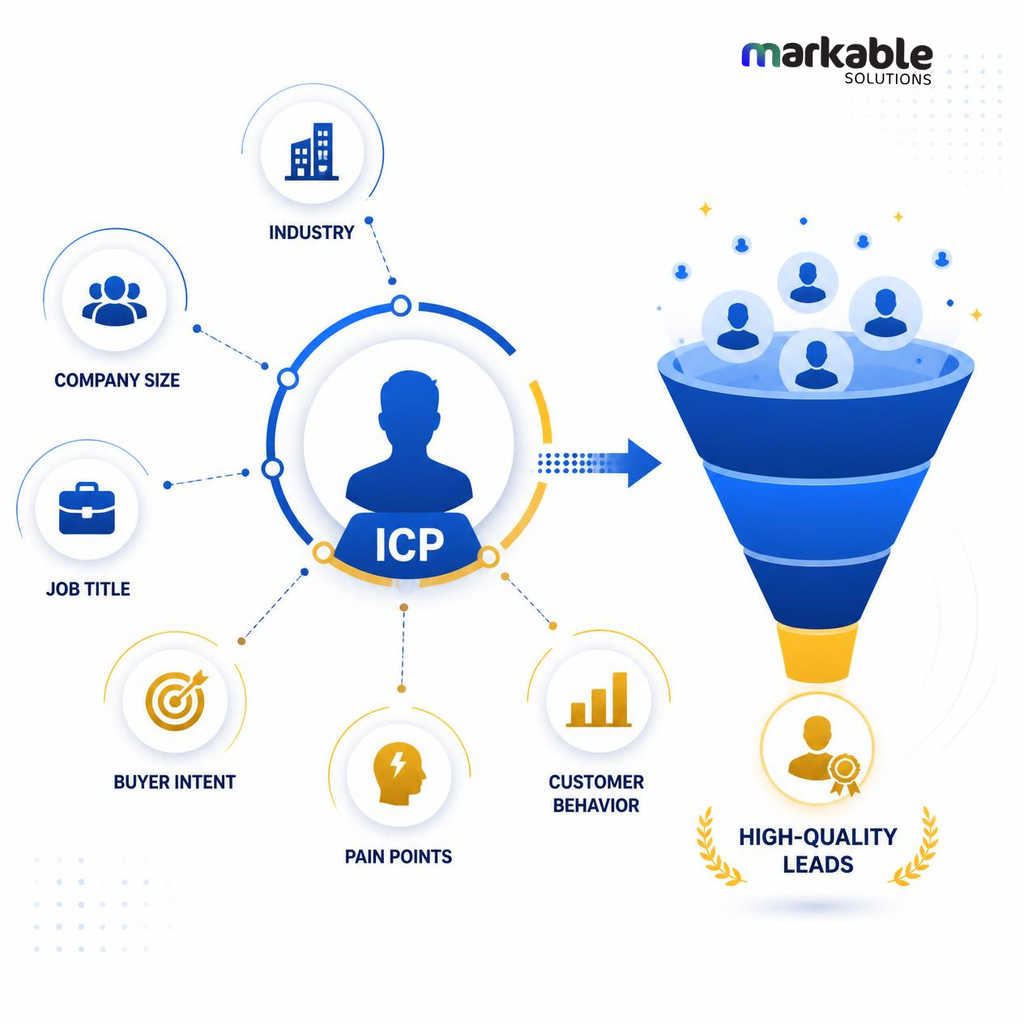
What is a customer profile example?
Let’s understand with an example of a B2B SaaS company and how it could define its ICP. A B2B SaaS company offering sales intelligence solutions might target mid-sized and enterprise businesses with 500–1,000 employees and established sales and marketing teams. The profile could be further refined by identifying companies that are expanding their sales teams, entering new markets, increasing demand-generation activities, or actively researching sales intelligence and lead-generation solutions. This creates a more dynamic ICP by combining firmographic, technographic, and buyer demographic data with behavioral and intent signals, going beyond factors such as company size or industry.
What Is a Traditional vs. a Dynamic ICP?
A traditional ICP includes an ideal company defined by fixed evaluation criteria, such as industry, revenue, location, employee count, and growth stage. A dynamic ideal customer profile consists of profiles that layer in updated, real-time information, such as the adoption of a different technology, data, market expansion, mergers and acquisitions, funding announcements, and other factors, including changes in leadership and shifts in workforce size.
Companies that leverage dynamic ICPs see their sales and marketing teams perform better because they target the same high-intent B2B buyer profiles. B2B marketing teams need stronger ICP models based on firmographic, demographic, and technographic data. Traditional marketing, which was primarily based on firmographic data, is not sufficient. Businesses need demographic and technographic data integrated with AI-enabled intent-buying signals.
According to a 2026 Salesforce survey of more than 4,000 sales professionals, AI adoption in sales is now mainstream. It states that 87% of sales organizations are using it for tasks such as prospecting, forecasting, and lead scoring. The survey also reveals that 94% of sales leaders who use AI agents say these agents are critical to meeting business demands.
This blog is a guide to building dynamic and continuously evolving ICPs that meet your requirements. Marketing intelligence with AI-enabled technology helps marketing and sales teams build ideal customer profile models and target a B2B prospect list that converts into customers.
How to Build a Dynamic ICP
- Review your best customers: Your ICPs are your best customers. Period. You need to review your CRM for customers with the highest average order value (AOV). Review customers with deep product adoption and high customer lifetime value (CLV). Also look out for accounts with the lowest churn and that responded positively to customer expansion initiatives. These are your best customers, and you need to study their characteristics, employee size, job titles, the company’s financial feasibility, and factors that can impact the accounts’ readiness to make a buying decision. Get in touch with your customers and collect feedback on how you helped them overcome their challenges. Your CRM is a goldmine that will help you build an ideal customer profile model when implemented, and it will also build a sustainable revenue pipeline. Revenue Operations (RevOps) teams can predict next quarter’s revenue by focusing on buyer profiles derived from existing customers. It also enables RevOps teams to develop GTM strategies that build pipelines with a higher probability of closing. A B2B sales lead-generation agency in San Francisco, Chicago, New York, or Hampshire leverages existing customer data to identify ICPs and generate leads.
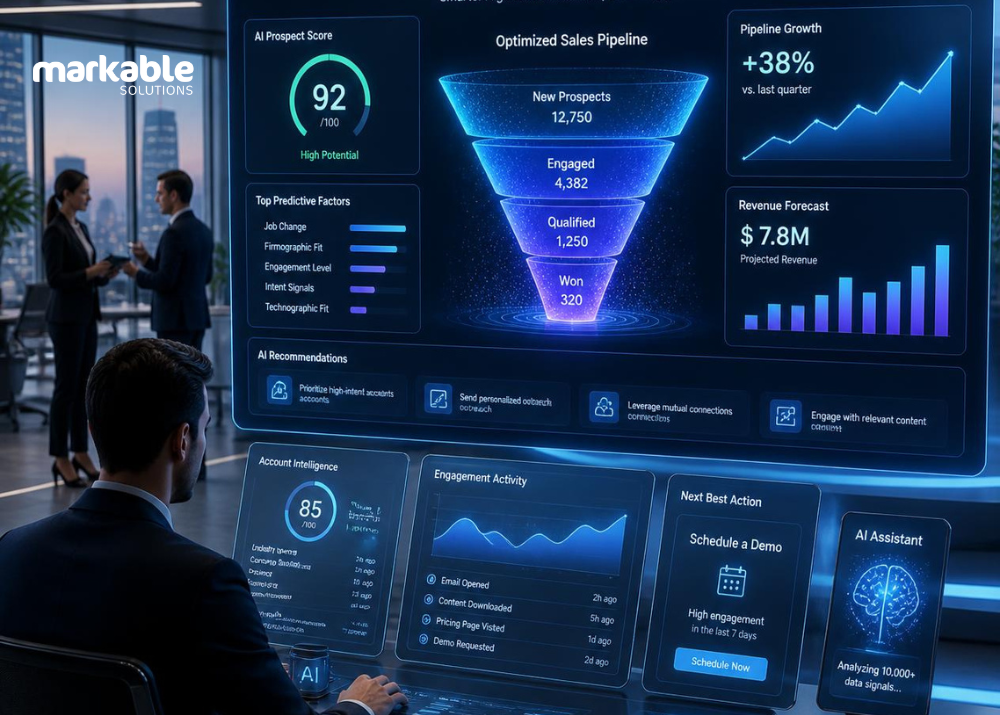
- Track Intent-led Buying signals: Now, this is one of the most important criteria when you want to build a B2B prospect list comprising high-intent prospects. ICP identification is only accurate when driven by prospects’ real-time buying behavior. A B2B lead generation company will pair them with ICP identification services to build the most accurate ICP profiles. Intent data marketing helps you uncover the true intent of your target profiles. Solely relying on firmographic data will limit your understanding of whether a company is a good fit. But intent data will dig deeper and uncover signals such as accounts within the company searching for solutions, content consumption, and user activity such as visiting a website or talking to a live agent. These signals go beyond your digital footprint and help you understand their overall activity, enabling you to engage them around a particular business problem they are trying to solve. It helps with qualified lead generation by providing a comprehensive picture of user behavior and their potential buying interest.
This approach can deliver measurable results. Enriching CRM data with behavioral and intent signals provides sales teams with valuable context to identify accounts actively researching a solution. It dismisses the role of static contact and firmographic data. According to Dun & Bradstreet’s B2B intent-data research, identifying in-market prospects resulted in a 13% increase in conversion rates.
- Prioritize Data enrichment: You can build ideal customer profiles based on behavioral signals and intent-led firmographic, demographic, and technographic data. But certain characteristics of the ideal customer profile and buyer persona can change over time. For instance, a decision-maker in a targeted account may move to another organization, or the company may announce a merger or acquisition. It may enter a new market or even change its technology stack. With these changes, the old profile you created will no longer be relevant. Data enrichment is crucial for keeping the B2B prospect list up to date. The marketing and sales teams will refer to these updated details and base their engagement strategies on them.
- Review Your ICP Periodically: A dynamic ICP requires regular updates. Companies must revisit their ICPs at least every quarter. It offers a strong foundation for the sales and marketing teams, enabling them to integrate personalization in their outbound reach. Markets shift; companies may undergo mergers and acquisitions or funding rounds; leadership may change; and demand for new technology can emerge. Businesses need to refine their ideal customer profiles as these new developments render the previously defined ICP insufficient. The best approach is to combine intent data marketing with firmographic, demographic, and technographic layers to ensure you’re targeting the right people at the right time.
How can a B2B Sales Lead Generation Agency Build a Dynamic ICP model?
A B2B lead generation agency understands the value of data-driven marketing powered by artificial intelligence. Smart targeting helps them analyze existing customers to identify the characteristics typical of their best customers. Marketing and sales intelligence enable a lead generation agency to go beyond static firmographic profiles and uncover insights from intent data to support qualified lead generation. These experts also regularly update and enrich the data, thereby improving contact-level accuracy and identifying key decision-makers.
Conclusion
A business must build dynamic ICPs and build a high-intent B2B prospect list. Dynamic ICPs serve as a strong foundation for lead generation and account-based marketing programs. Intent data is key to building dynamic ICPs comprising high-intent prospects. It offers insights into buyer behavior that go beyond what firmographic data alone provides. With AI-embedded account targeting and scoring, the team builds a strong ICP profile that drives a strong revenue pipeline. It’s best to outsource lead generation and ABM programs to an expert in generating qualified B2B leads.
Partner with a B2B lead generation agency in the United States
Markable Solutions is a leading B2B sales lead generation agency that builds data-driven Ideal Customer Profiles (ICPs) using firmographic, technographic, demographic, and behavioral data. Our core expertise lies in B2B qualified lead generation, where we use AI-enabled intent data to develop dynamic ICPs that evolve with changing buyer behavior and market conditions. Our B2B prospect lists are regularly enriched, validated, and updated, helping clients make their lead-generation and account-based marketing (ABM) programs more laser-focused on the accounts most likely to convert.
If you need more information about integrating a dynamic ICP model for your lead-generation programs in San Francisco, Chicago, and New York or even in Hampshire, feel free to book a discovery call. Our team will walk you through our data-driven approach to ICP identification, including how AI, intent data marketing, and continuous data enrichment will help you identify high-intent accounts and generate high-quality B2B leads.
FAQs
What is meant by an Ideal Customer Profile (ICP)?
An Ideal Customer Profile consists of the characteristics of a company that has a high probability of becoming your customer. A B2B lead generation agency builds an ICP leveraging AI-enabled firmographic, demographic, and technographic data and behavioral buying signals.
How can a company build a dynamic ICP?
A dynamic ICP consists of buyer profiles based on industry, company size, revenue, demographics, technographic data, and behavioral signals derived from intent data and powered by Artificial Intelligence (AI). It builds a dynamic ICP that marketing and sales can use to personalize and engage accounts more effectively.
What is the importance of intent data marketing in ICP identification?
Intent data makes static firmographic data more dynamic by adding real-time signals of buyer behavior and account activity. This enables both teams to prioritize high-potential accounts and personalize engagement based on buyer interests. It makes sales and marketing alignment fruitful by ensuring they work from the same account-level signals and focus on high-intent prospects.
Why is data enrichment important in building accurate ICPs?
Data enrichment activity ensures that a company relies on a relevant ICP based on updated demographic and technographic details. ICPs are dynamic; there may be several changes, such as changes in leadership, financial conditions, demand for new technology, and market expansion.
How often should a dynamic ICP be updated?
It’s advisable to update their ICP quarterly rather than annually. It has been observed that teams with quarterly updates achieve a higher marketing-qualified-to-closed-won conversion rate compared to teams that update their target profiles annually. It is crucial to incorporate these changes through intent data marketing, since market shifts, funding events, and leadership changes can render a profile stale within months without it.