Introduction
In traditional lead generation campaigns, sales and marketing teams operated as separate units and pursued their own goals. Marketing teams attracted the target audience and handed off leads to sales teams, which worked to convert them into customers. CS managers strengthened customer relationships, and expansion teams drove higher customer lifetime value (CLV). But the process was disconnected. Neither team could see what the other was doing. They weren’t sure whether they were working on the same leads. They were often unaware of lead status, engagement outcomes, or the challenges customers faced in the buyer journey. But these insights are crucial for all the teams to drive business growth.
With revenue operations (RevOps), the lead generation process is streamlined through cross-functional alignment, as teams work together towards shared revenue outcomes. The shift to revenue operations helps businesses close operational gaps that slow marketing and sales teams and enables customer success managers and customer expansion teams to bring revenue through renewals and repeat purchases. A unified RevOps model ensures operational efficiency and greater visibility into the buyer journey. AI-enabled automation optimizes repetitive workflows across teams, letting them spend more time on revenue growth instead of searching for crucial buyer information scattered across tools and systems. With intent data marketing, predictive lead scoring, and nurturing, they can move buyers faster through the marketing funnel from awareness to the buying stage.
Customer success teams also share valuable feedback, enabling expansion teams to increase revenue through timely upsell and cross-sell engagement.
Key Highlights
- Traditional lead generation programs comprised teams working independently, without an integrated tech stack, resulting in a siloed approach.
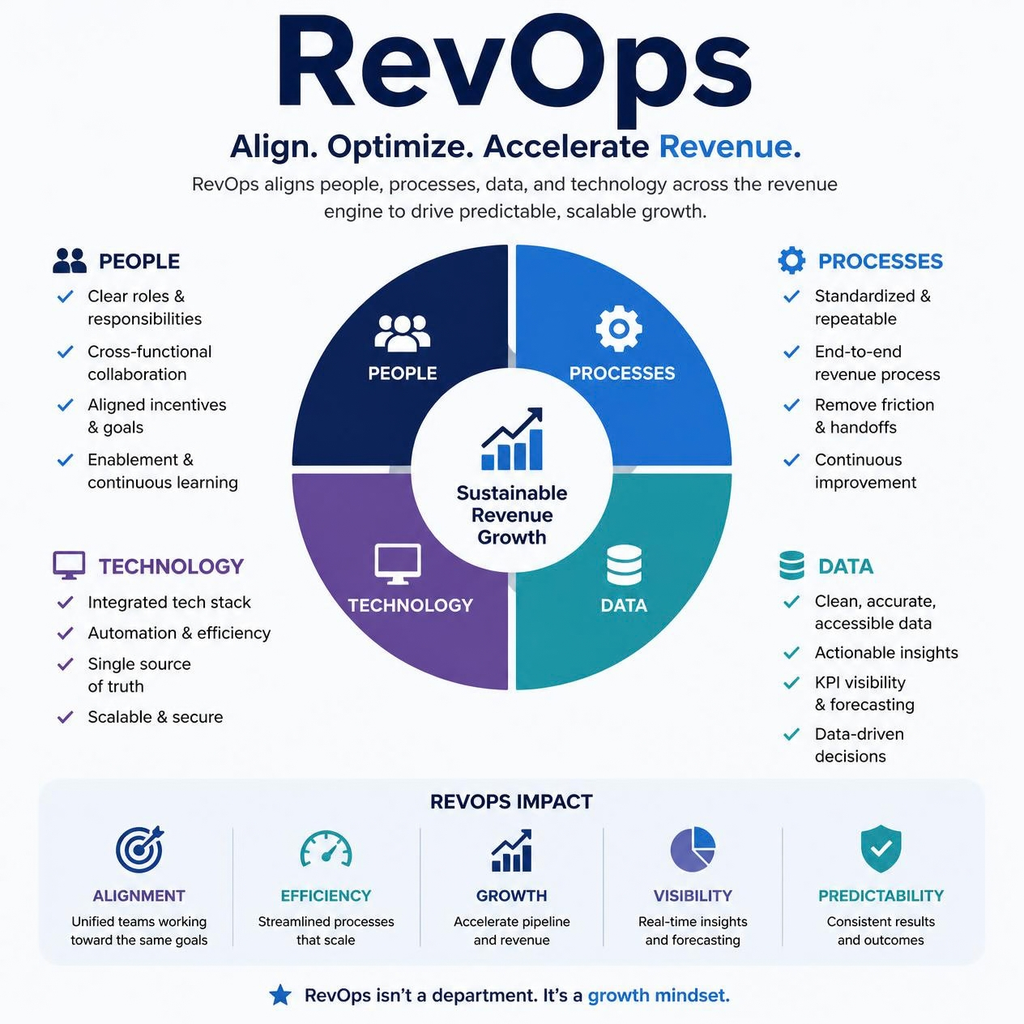
- RevOps refers to Revenue Operations. It’s a strategy that unifies marketing, sales, and CS teams around a single, connected, common process to improve efficiency and maximize revenue.
- RevOps looks beyond individual departmental targets and focuses on how every function contributes to overall revenue performance.
- Teams use the same ideal customer profile (ICP) identification and qualification process and leverage the same insights to engage prospective buyers and convert them into customers more efficiently.
- Intent data marketing enables teams to identify and target in-market accounts and generate revenue by targeting the right audience at the right time.
- RevOps shifts demand generation from simply generating leads to generating relevant, high-quality leads that drive conversions and promote sustainable revenue growth.
What is RevOps?
RevOps refers to revenue operations, an approach that unifies marketing, sales, and CS around the same ideal customer profiles (ICPs) and targets the same B2B prospect lists. It gives teams access to centralized technology, providing real-time buyer journey data and helping them optimize engagement by mapping it to the buyer journey. It has reshaped the lead generation process by acknowledging that the focus should not be only on lead generation, but also on conversion, customer acquisition, and customer retention. This shift from lead generation to generating measurable business outcomes now defines true revenue growth. When teams work from connected data and consistent processes, businesses gain visibility into the revenue pipeline and can more efficiently control the factors that influence revenue growth. They can make better decisions and build a predictable revenue pipeline.
Gartner also says that RevOps helps organizations unify the end-to-end buyer journey. It improves conversions, reduces revenue leakage, and helps optimize the use of customer data. The research also says that the focus goes beyond generating leads.
Why is RevOps important for a demand generation company?
RevOps connects the entire process from lead generation to customer acquisition to customer success. Demand generation doesn’t just track lead volume; it also evaluates whether leads are relevant, can progress through the marketing funnel, and will convert into customers. A forward-looking demand generation company adopts a revenue operations-driven strategy for demand generation, lead generation, customer acquisition, and upsell.
The Shift from Lead Generation to Revenue Operations (RevOps)
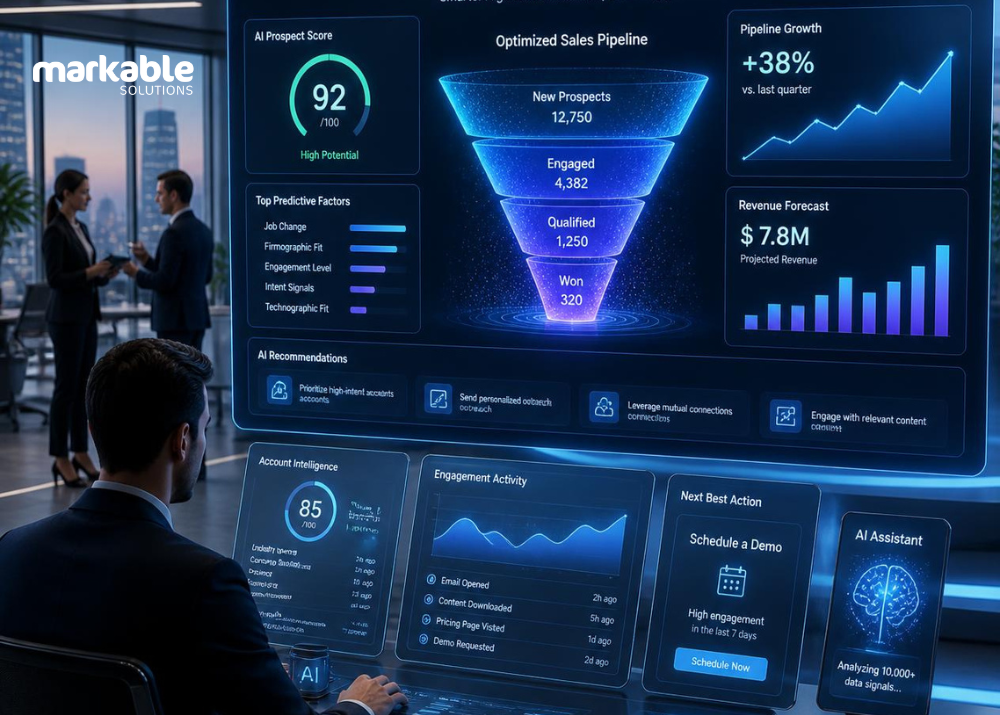
- Automated pipeline review and optimization: Traditional lead generation relied on manual pipeline review, which is time-consuming and error-prone. Now the process has shifted to AI-powered technology that automates it. It continuously analyzes data, identifies patterns, and uses AI-powered insights to integrate revenue intelligence. RevOps teams build a connected revenue engine that unites marketing, business development, and customer success teams. Although each team works toward its own targets, their processes complement one another through common marketing and sales intelligence. It gives each team connected technology and processes that drive revenue by identifying ICPs, generating demand, and acquiring customers. This is followed by CS and expansion services. This unified strategy helps the business achieve long-term revenue goals.
- More accurate pipeline forecasting: To build a predictable revenue pipeline, businesses require an in-depth understanding of the buyer journey. They need to give their teams transparency and real-time visibility into the buyer journey. With connected data, tools, and a common process, teams can target the same profiles and move them faster from awareness to the buying stage. Successful customer success initiatives increase business profitability. RevOps teams ensure a continuous feedback loop across marketing, sales, and CS. The marketing team understands which prospects and campaigns generate meaningful opportunities, while the sales team qualifies leads and shares feedback on lead quality through one-to-one telemarketing conversations. The customer success teams can share insights into customer engagement, expansion potential, and which accounts were harder to expand and which ones aligned smoothly. The RevOps teams rely on this connected visibility to make more informed decisions. They can improve forecasting accuracy and enable the business to allocate resources more effectively. It helps them build a strong GTM strategy that drives more revenue.
- Alignment of teams: Gone are the days when marketing, sales, and CS teams worked as distinct units. But that is no longer the case; they are more aligned and work in tandem. They have one reference for ‘what is an ideal customer profile ‘. They share the same technology and visibility into each other’s engagement processes. Both teams qualify leads using the same criteria and have a smooth handoff between marketing and sales. Data appending and continuous data enrichment strengthen B2B prospecting lists and ensure each team targets ICPs more efficiently, with a contextual understanding of their needs, problems, and preferences.
- Turning Buyer Signals into Revenue Opportunities: Intent Data has become the cornerstone of B2B marketing. A demand generation company previously relied only on past campaign results, historical data, and guesswork to draft the best strategy for B2B lead generation and customer acquisition. But intent data marketing also prioritizes in-market and high-intent buyers. It also brings hidden buyers into focus. They are in-market buyers actively searching for products and services to overcome business challenges. The only difference is that they don’t leave footprints in your digital property because they’re in the dark funnel. RevOps ensures each team operates as one unit and uses the same signals to map the buyer journey and advance it through the marketing funnel. Buying behavior becomes the reference point for identifying the in-market target audience, enabling the marketing and sales teams to base their engagement strategies on it. They can considerably improve the reach of marketing assets and sales conversations, resulting in faster deal progression and higher conversion rates. Intent data, combined with AI-powered technology, can help RevOps teams build more accurate, data-driven strategies.
- Customer Success becomes an integral part of RevOps: Yes, RevOps operations not only unify sales and marketing but also loop in customer success. CS teams provide valuable insights into customer management. They reveal customers’ biggest challenges, pain points, and the solutions they expect when investing in a particular product or service. Buyers are more aware, their expectations have soared, and they expect a unified customer experience. This connected experience is only possible if a business has a connected engine that aligns the marketing, sales, and CS teams. Overlapping processes and findings stay integrated across the system, providing a clear view of the buyer journey. The business gains insights into what drives the first interaction (with marketing assets), appointment outcomes, and follow-up conversations (with telemarketing). It also offers insights into retention strategies that increase customer lifetime value (with CS and expansion). RevOps brings customer success into the broader revenue process, allowing businesses to use customer insights not only for retention but also for expansion and revenue growth. CS teams have direct visibility into customer engagement, product adoption, challenges, satisfaction, and future needs.
FAQs
1. What is meant by the RevOps operational model?
RevOps is an acronym for ‘Revenue Operations’. It is a highly effective strategy that unifies marketing, sales, and customer success around connected data, technology, processes, and revenue goals. This alignment improves lead targeting and management and speeds deal progression. Teams can focus on high-intent leads and increase revenue growth with a high conversion rate.
2. What is the difference between traditional lead generation and RevOps?
The former focuses on lead generation, and teams work as individual units, primarily pursuing their own goals. The latter focuses on building a connected revenue-building engine in which marketing, sales, and customer success work as one unit. It promotes business growth and maximizes revenue.
3. Why is intent data important for RevOps?
Intent data marketing drives a business’s success today. RevOps ensures all the teams leverage intent data. It helps them identify high-intent accounts actively showing buying signals. It layers intent data with firmographic, demographic, and technographic data to identify revenue-generation opportunities and prioritize them on a timely basis.
4. How does RevOps improve pipeline forecasting?
RevOps aligns marketing, sales, and customer data together to provide greater visibility into pipeline health. Teams leverage AI-powered revenue intelligence to identify risks, challenges, and opportunities, enabling more accurate next-quarter revenue forecasts based on the data generated.
5. How does RevOps improve customer lifetime value (CLV)?
By looping customer success into the revenue process, RevOps connects ICP targeting, customer acquisition, retention, and expansion in one unified process. The CS and customer expansion teams can understand the buyer journey and adopt the right upsell and cross-sell framework.
Conclusion
RevOps is the future of lead generation and a modern approach to demand generation. Traditional lead generation now rides on technology that leverages artificial intelligence, intent data marketing, and predictive analytics to connect all the teams who can benefit from a streamlined lead generation journey. RevOps helps businesses turn customer insights into revenue opportunities by connecting customer engagement, retention, and expansion data with marketing and sales operations.
From identifying ICPs and understanding buyer intent with real-time buying signals to acting on insights, every team benefits. When these insights are connected, businesses can better understand what happens after they acquire a customer. The focus is no longer just on lead volume or generating MQLs, but on pipeline growth, sales velocity, and increased customer lifetime value with an AI-enabled tech stack.
How Markable builds a connected revenue enablement strategy
At Markable Solutions, we understand that modern demand generation is no longer tied to merely filling the pipeline with top-of-funnel leads. Business strategies have moved beyond lead generation to revenue operations: building a strong pipeline and driving revenue growth. It generates meaningful opportunities that support sustainable revenue growth.
We leverage the latest AI-enabled technology and integrate contact-level intelligence with precision-led, targeted outreach. We help you move beyond lead generation and build a sustained revenue pipeline with RevOps. Our goal is to generate B2B leads that drive real impact on your revenue pipeline and support your organization’s long-term success. As a leading demand generation company, we generate demand and leads with a RevOps-ready revenue engine that connects data and technology to drive high-quality leads into the marketing funnel.
Book a free discovery call to learn how we identify high-value B2B prospects and convert buyer intent into qualified opportunities, strengthening your revenue pipeline with a robust revenue operations model.