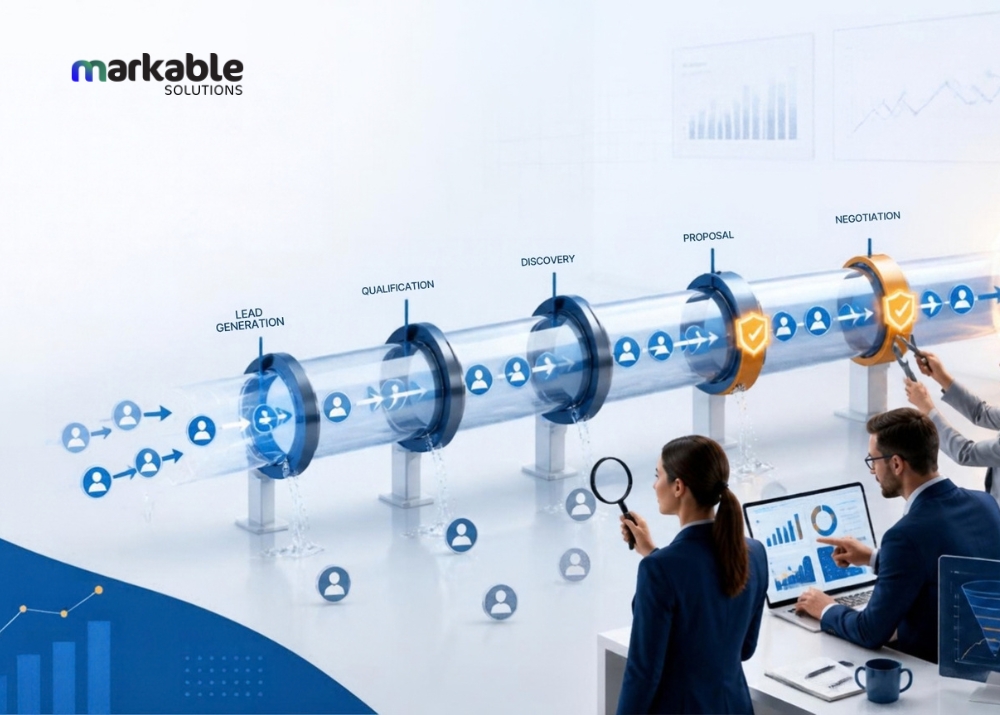
Everyone is excited on the team. The marketing team sees a surge in lead volume in the B2B lead gen campaign, and sales becomes successful at appointment setting. The early numbers look positive, but conversion rates drop sharply. What causes the sales pipeline to leak down the line, despite being predicted as strong and sustainable? A leaking funnel gradually erodes revenue as potential opportunities drop out at different stages in the B2B marketing funnel. The targeted prospects may be a poor ideal customer profile (ICP) fit and eventually drop off at the lead-qualification stage. Follow-ups and opportunity creation may miss the mark when it comes to tapping active revenue opportunities and converting them to sales. The problem is not a lack of leads. A business may generate a high volume of leads, including highly qualified ones. The issue is how they move through the pipeline, reach the closing stage, and convert into customers. The pipeline may look healthy on the surface but leak underneath, weakening it as opportunities drain for various reasons. Identifying revenue pipeline leaks is crucial for winning B2B deals by ensuring the qualified lead generation process is implemented as planned.
Revenue pipeline leaks exist across the entire lead lifecycle. Businesses must close the gaps that keep revenue opportunities from being tapped and converted into customers. A prospect may enter the funnel but may be overlooked for further nurturing because of a delayed handoff to the sales team. Did you know HubSpot’s current 2026 sales statistics show that 80% of successful sales require five or more follow-up calls? But the sad part is that 48% of salespeople never follow up, and 44% of them stop after one follow-up. That is why we say the sales pipeline doesn’t break with the loss of one or a few revenue opportunities. Continuous loss of revenue opportunities weakens the pipeline over time and ultimately snaps it, causing significant revenue loss. Let’s find out why the sales pipeline leaks and how to fix it. At Markable Solutions, a leading B2B lead gen agency, learn how a structured, proven lead generation framework and sales engagement process can help you identify and fix pipeline leaks before they impact revenue.
How to fix sales pipeline leakage and tap revenue opportunities
- ICP identification: What happens if you realize the leads aren’t the right fit? Poor ICP identification is one of the many causes of a weak pipeline. Leads may enter the sales pipeline, but they struggle to move forward. The biggest reason is that the leads weren’t an ICP match from the start. They may not match your ideal customer profile or buyer persona. Their behavior may initially show inclination and interest in your business, but it may not be explicitly directed toward your products and services. The pipeline may look healthy, but there may be false positives. But targeting ICPs based on basic firmographic and demographic fit may not fix the issue. Teams need a complete picture of prospects, with intent data that goes beyond firmographic and demographic data. What challenges is the business facing? What is their current need? What solutions have they been looking for? For proper ICP qualification, consider these factors to build a strong B2B prospect list for your lead generation and ABM campaigns.
- Sales and marketing alignment: What if your marketing and sales teams are not aligned? What if they aren’t targeting the same ICPs? What’s worse than that? They don’t have the same ICP qualification criteria. That kind of misalignment will cause a leaky pipeline. Regardless of lead volume or quality, if the teams aren’t aligned, leads are likely to fall off the funnel before they understand who they should ideally be targeting. Experienced companies implement a marketing-and-sales alignment structure where both teams refer to a shared ICP definition. They agree on what is a marketing-qualified lead (MQL) and a sales-qualified lead (SQL). They share processes, tools, and technology, which helps them stay aligned on deal progression. This alignment ensures they share feedback on leads. It helps them refine ICPs and ensure high-quality leads are driven into the pipeline, nurtured, and converted into customers.
- Lead qualification: During one-to-one conversations, it’s important to qualify the lead correctly so it progresses and becomes qualified. A B2B lead gen agency uses a proven lead-qualification framework, such as BANT. It qualifies leads against four key criteria to determine eligibility. If leads meet the budget, authority, need, and timeline criteria, they move seamlessly through the sales pipeline. Without proper lead qualification, sales teams can waste time on low-intent leads that will drop off the funnel simply because they weren’t a qualified fit. The revenue pipeline needs clear lead-qualification criteria applied consistently during one-to-one telemarketing conversations. Robust lead qualification with the BANT framework helps identify genuine sales opportunities, prioritize them, and move them faster to the decision-making stage.
- Lead follow-up: Missed follow-up windows are a major concern, as they can cause revenue opportunities to be missed, especially if a prospect has already been qualified as an MQL or a SQL. Follow-up must be done promptly. Timely, personalized engagement drives progression from the top of the funnel to the bottom. Companies must capture users’ interest and nurture leads before they switch to competitors. Slow prospect engagement hurts not only the current revenue pipeline but also demand generation, as a lack of response can affect customer perception and, eventually, demand. Timely responses should be a priority for building a strong, sustainable revenue pipeline. Businesses need to follow up with leads through personalized engagement. Generic messages will not generate any response from leads. As discussed before, intent data marketing will help you tap into their current behavior and true needs. Personalization is key to moving leads forward in the B2B marketing funnel. Intent-driven insights help tailor communication and elicit a response from generated leads. Timely, personalized responses keep momentum going as leads move through the funnel, preventing stalled opportunities caused by delays in lead nurturing and generic communication.
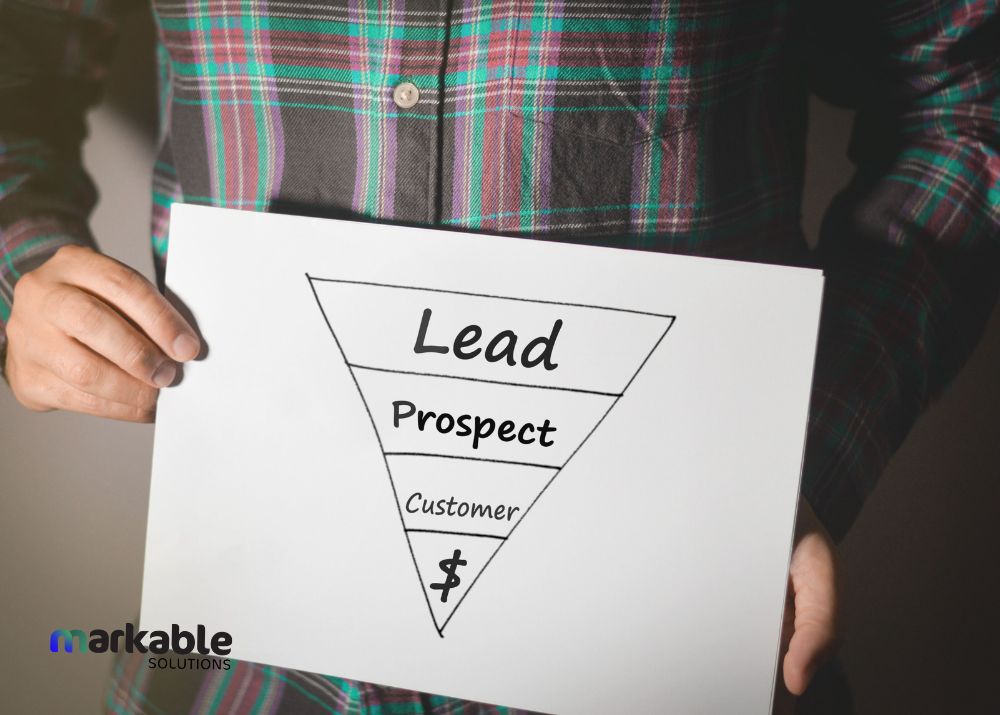
- Pipeline diagnosis: If you don’t review your pipeline regularly, you can’t pinpoint what’s causing a broken pipeline. A pipeline may appear healthy because of lead volume and lead quality, but what matters is whether leads move through the funnel and convert into customers. Businesses can use technology to diagnose the pipeline and make informed decisions with data-driven, actionable insights. They can identify stalled opportunities and spot weak handoffs between stages in the lead lifecycle. It is vital to review the lead journey and track when a lead becomes a marketing-qualified lead (MQL), progresses to a sales-qualified lead (SQL), moves to an appointment or discovery call, becomes a sales opportunity, and ultimately closes as a B2B deal. Companies must identify where the leak happens and take corrective action to plug the loopholes in the revenue pipeline. For example, a B2B SaaS company may generate 1000 leads and 30 sales-qualified opportunities, but only 3 become customers. A pipeline review may reveal that leads stop progressing after the demo because of delayed follow-ups. Prospects may not have received demos in time and may have moved to competitors. Leads may not be decision makers, or their budget may not fit the proposed B2B SaaS product. Reviewing the journey from lead to MQL, SQL, meeting, opportunity, and closed deals helps teams find leaks and fix them before they become patterns and cost more revenue.
Implementing AI-enabled technology for fixing revenue leaks in the sales pipeline
Gartner suggests implementing AI-augmented ICPs that focus on accounts that are actively buying. AI-enabled technology makes the entire lead lifecycle more efficient and results-oriented. Intent data marketing combined with AI tools makes ICP identification more accurate. When teams combine intent data with AI-enabled tools, they get a comprehensive, real-time view of leads. They can identify prospects that match their ICPs and buyers who are actively searching for products and services. Beyond basic firmographic and demographic fit, AI-enabled tools uncover insights faster and more efficiently, so teams don’t miss opportunities and can reach out at the most opportune time.
Buyer signals and intent-driven insights with AI-driven technology make it easier to identify ICPs active in the market. They improve lead scoring with predictive insights. Machine learning (ML) uses historical data and pattern recognition to identify buyer personas and ICPs that the human eye may overlook. Technology uncovers patterns and helps teams reach out with personalization. With personalized communication, they get faster responses, and conversations move forward to appointment setting and discovery calls. Leads progress faster through the sales funnel and reach the consideration and buying stage.
Conclusion
A leaky B2B pipeline causes major revenue damage as opportunities slowly drain and revenue is lost. Companies must adopt a robust lead management approach by defining what a qualified lead is and optimizing the marketing-to-sales handoff. The handoff is critical because the lead is warm and actively interested. SDRs can qualify leads using BANT and set appointments successfully.
At Markable Solutions, a reliable B2B lead gen agency in USA, we optimize the revenue pipeline with a structured approach to prevent leaks that gradually cause significant opportunity loss over time. Using intent data, we accurately identify ICPs and in-market buyers, qualify them with BANT, and support deal progression with timely follow-ups and personalized communication. We review the revenue pipeline regularly to identify gaps that may be causing revenue opportunities to drop and revenue to slip. With a proven framework that combines AI-enabled technology with our human expertise and B2B marketing experience, we help our clients win more B2B deals. Book a free discovery call to learn how we can build a strong, sustainable B2B pipeline for your business.
FAQs
- What is sales pipeline leakage?
Pipeline leakage means losing revenue opportunities because they move inconsistently through the pipeline. It means potential sales opportunities couldn’t be converted into customers because of issues along the pipeline. This may happen during ICP identification, marketing, follow-up, opportunity creation, lead qualification, or closing the B2B deal.
- Why does the pipeline leak? What are the main reasons?
Several reasons cause the sales opportunity pipeline to leak. The first and foremost is not correctly identifying the ICPs. This is a huge concern, followed by poor lead qualification and delayed follow-ups. The revenue opportunity is lost before it can be nurtured and converted into customers. Sometimes leads don’t convert during discovery calls because they may not be a good fit from the start. Pipeline leakage can be complicated and often stems from poor pipeline diagnosis. A B2B sales lead generation agency understands what it takes to seal the pipeline, move opportunities through sales, and increase conversion rates.
- How can businesses identify revenue loss in the sales pipeline?
Companies must thoroughly evaluate how leads move through the sales funnel. What happened to the lead after it was handed over to sales? Was the handoff smooth, or was there a delay? What was the response time, and how long did leads spend at each stage? How many leads were generated at the start of the funnel, and what was the conversion rate? How many opportunities were stalled in the pipeline? If a sizeable number of sales opportunities were generated but didn’t convert as expected, that’s a pipeline leakage problem.
- Does intent data marketing play a role in fixing the revenue pipeline leakage?
Yes, intent data plays a significant role in preventing revenue opportunities from slipping out of the pipeline. It spans the entire lead lifecycle and their progression with intent-led engagement. It starts with better ICP identification and lead qualification, lead nurturing with personalized engagement, and improved response rates. It ensures smoother deal progression, with all teams connected and driven by data-led insights. Intent-enabled marketing helps businesses close B2B deals.
- How can a B2B sales lead generation agency fix the revenue leakage problems?
A B2B sales lead generation agency fixes revenue leakage by identifying the gaps that prevent leads from converting into sales opportunities and, ultimately, customers. They have expertise in ICP identification, BANT lead qualification, and timely follow-ups. They use the latest AI-augmented technology to keep deals moving smoothly in the funnel. The agency identifies and taps into strong revenue opportunities and prevents them from falling off the funnel.