The Truth About Intent Data No One Told You
A click, a website or landing page visit, or a download of gated content; they all sound exciting! They seem to indicate intent. Your CRM blares buying intent like a honking alarm. The marketing team is all ears, and the sales team gets into action. But did the deal happen? No? The intent was genuine, but it didn’t lead to a conversion. This is a problem most companies face when leveraging intent data.
Viewing a page, clicking a link, or downloading content appears to indicate a lead’s intent. But that doesn’t imply true buying readiness. Without context and an understanding of what led to the action, these actions are just signals and cannot be interpreted as B2B buyers actively looking to purchase products or services.
So how do you separate noise from intent signals, overcome this challenge, and make the most of intent data to drive high-quality leads into the B2B marketing funnel?
Why, how, and where Intent Data Goes Wrong?
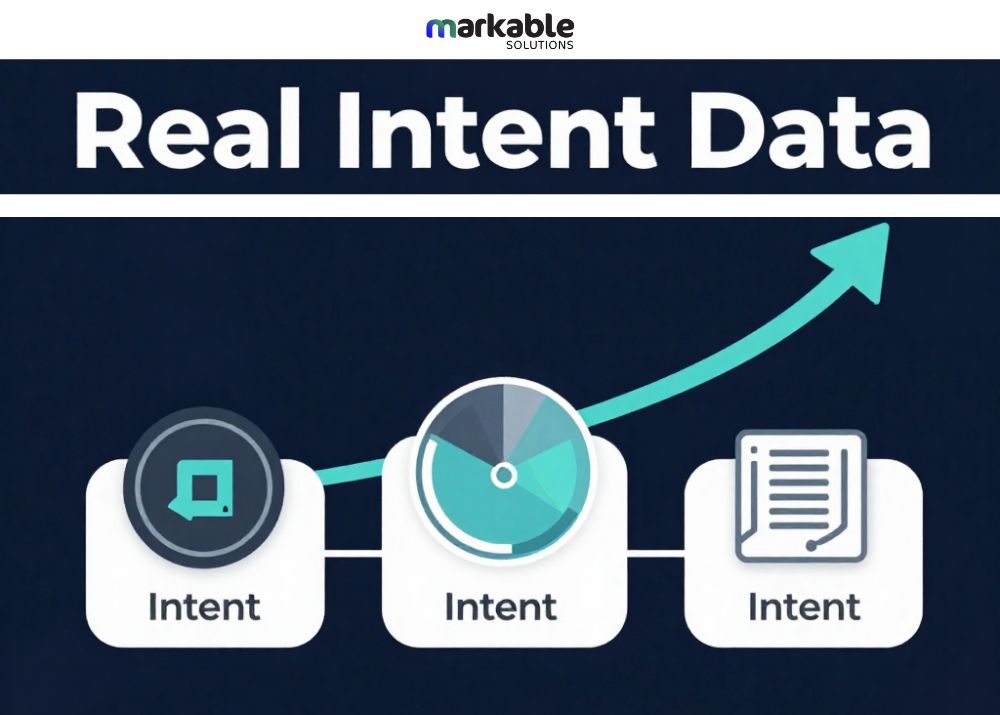
For businesses that say they don’t benefit from intent data, they often struggle to leverage it correctly. It requires experience to identify hidden signals, synthesize data, and exercise judgment to ensure signals are relevant and generate sales-qualified leads. It’s best to hire a lead-gen company that can help you capture intent in real time and bridge the gap between your business and customers. Not all intent data is equal; you need precise judgment to determine which intent signals to prioritize and score leads accordingly. Everyone talks about intent data, but let’s help you find the real intent that’s hardly discussed.
- Not distinguishing between intent signals: A target audience may download a whitepaper out of curiosity or for market research; this is not an intent signal. Unless there is consistent action over time, it cannot be considered actual purchase readiness. Also, unless a target audience exhibits it, it does not confirm buying intent; even if it does, we doubt it will benefit your business unless it aligns with your ideal customer profiles. All signals are considered activity, but not all activity is intent; you need to differentiate between the two. An action is a raw data point without context, and it is highly likely to be misleading. Without identifying the ‘why’ behind the action, it’s all noise, and the signals weaken; you start targeting profiles that aren’t ready to make a buying decision. In fact, they may not even be deciding to buy in the near future. You need to layer AI-powered data with human judgment to introduce an unbiased perspective and determine whether the intent signal actually implies an intention to buy.
- Relying on a single source: Putting all the eggs in one basket is dangerous, and the same goes for identifying intent when relying on a single data source. You can discover B2B buyers and market-qualified leads by efficiently leveraging first-party and third-party intent data. It gives a complete picture of the leads and their behavior. User behavior within your digital footprint, combined with third-party data from a prospect database, can provide a clearer picture of the intent of ideal customer profiles (ICP). The fact is that relying on a single data source often yields misleading signals and no conversions. But combining it with third-party data helps identify user behavior beyond your brand. It gives a clear and reliable understanding of what the buyer actually wants, revealing the ‘real intent.’
- Lead qualification: By now, you should understand that intent signals indicate a lead is sales-qualified, but they can be misleading if not leveraged correctly. Using lead-qualification methodologies such as BANT, combined with intent signals, goes a long way toward determining purchase readiness. It helps identify the real signal and separates genuine sales opportunities from surface-level engagement. It helps differentiate signals that merely indicate interest in buying from those who are in the market and ready to take action soon. If the ICP has the budget, leads the decision-making process, and there is a genuine business need and an active buying timeline, it can be validated as an intent signal of strong purchase readiness. Of course, it needs to be validated, and telemarketing provides a final stamp of approval to confirm it as real intent, which helps win B2B deals.
- Data enrichment: It’s essential to regularly clean and enrich your B2B list to maximize ROI from your intent-driven B2B lead-generation and account-based marketing programs. Intent data will be effective only when your prospect database is up to date. Timely data enrichment enhances your understanding of intent signals and helps you target the right profiles with complete information. In fact, intent data performs best when data is appended regularly. The marketing and sales teams align to pursue the ICPs, and with a surge in their intent, the SDRs can take action to convert them into customers.
- Not using Artificial Intelligence: If you are not leveraging intent data merged with artificial intelligence (AI), then you’re missing out on identifying the actual intent. Earlier, intent analysis was limited to surface-level monitoring, but AI has enabled the integration of first- and third-party intent data. Today, lead generation companies leverage machine learning (ML) and integrate it with intent data to cast a wide net over user behavior. It offers insights into the frequency and content of user engagement across various platforms. It helps identify high-intent leads within and beyond the company’s digital footprint.
- Timely action: Yes, intent data is beneficial and helps you identify high-intent leads who are ready to act. You can prioritize them to win more and more B2B deals. But if prompt action is not taken, your competitors will likely walk away with the leads. The timeline between the intent surge and engagement should be minimal to capitalize on their interest and capture the lead as soon as the signals emerge. Ideally, the marketing and sales teams need to be in sync to capture high-intent leads and move them through the B2B marketing funnel. As soon as there’s a surge in signals, the teams need to work in tandem to act quickly on leads.
Conclusion
Intent signals transform into leads and, ultimately, into B2B buyers only when leveraged correctly. Not all activity triggers purchase readiness; you need to qualify based on context and lead qualification models, such as BANT. Intent, with context and prompt action, will help identify real buying intent. Such leads must be prioritized and nurtured to convert into sales.
Hiring experts for leveraging Intent Data in B2B lead Generation
Markable Solutions, a reliable lead-gen company in the U.S., has been proactive in leveraging intent data to run lead-gen and ABM campaigns and to close B2B deals. We identify real intent signals that pinpoint high-intent leads that the business development teams can target immediately. Let your conversion rate soar by targeting high-intent leads on the verge of making a buying decision. Book a free discovery call and get experts on board to leverage intent data to drive sales-qualified leads into your B2B marketing funnel. Experts will help you separate the noise from the signals, and you can hum your way to SQLs that will boost your revenue!